
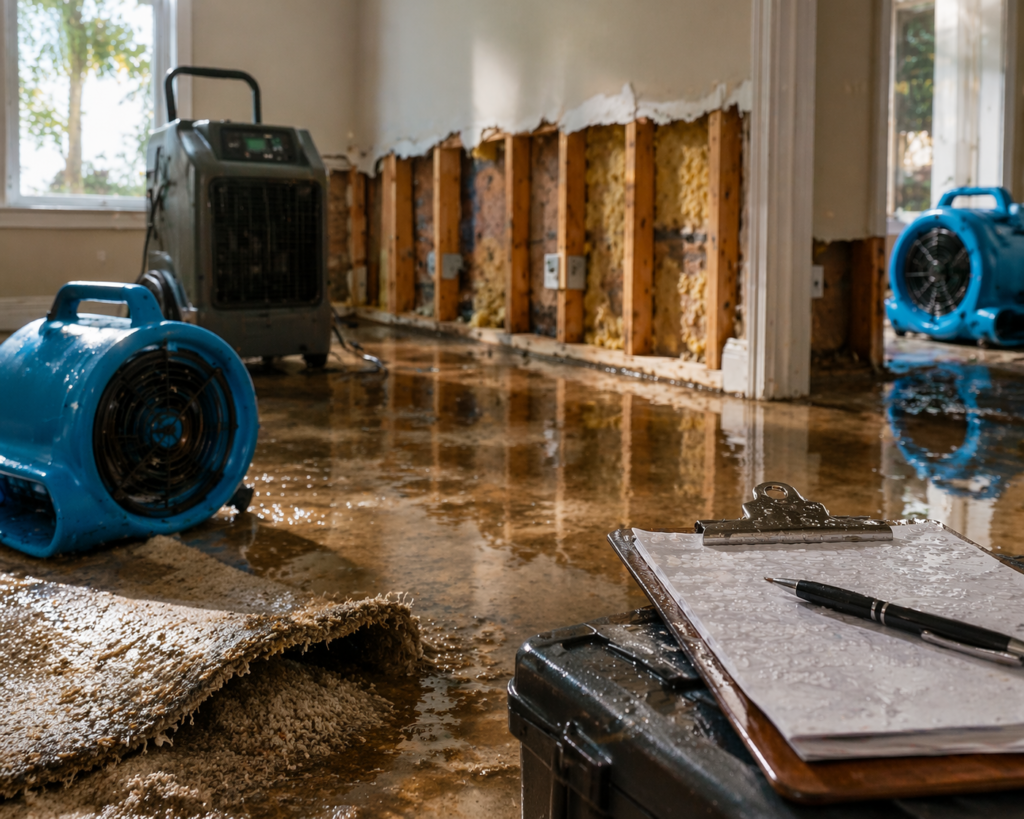
If you’ve got water in your home right now, you’re probably overwhelmed. Between fans, dehumidifiers, ripping out wet carpet, and just trying to keep your sanity — now you’ve got to deal with an insurance adjuster.
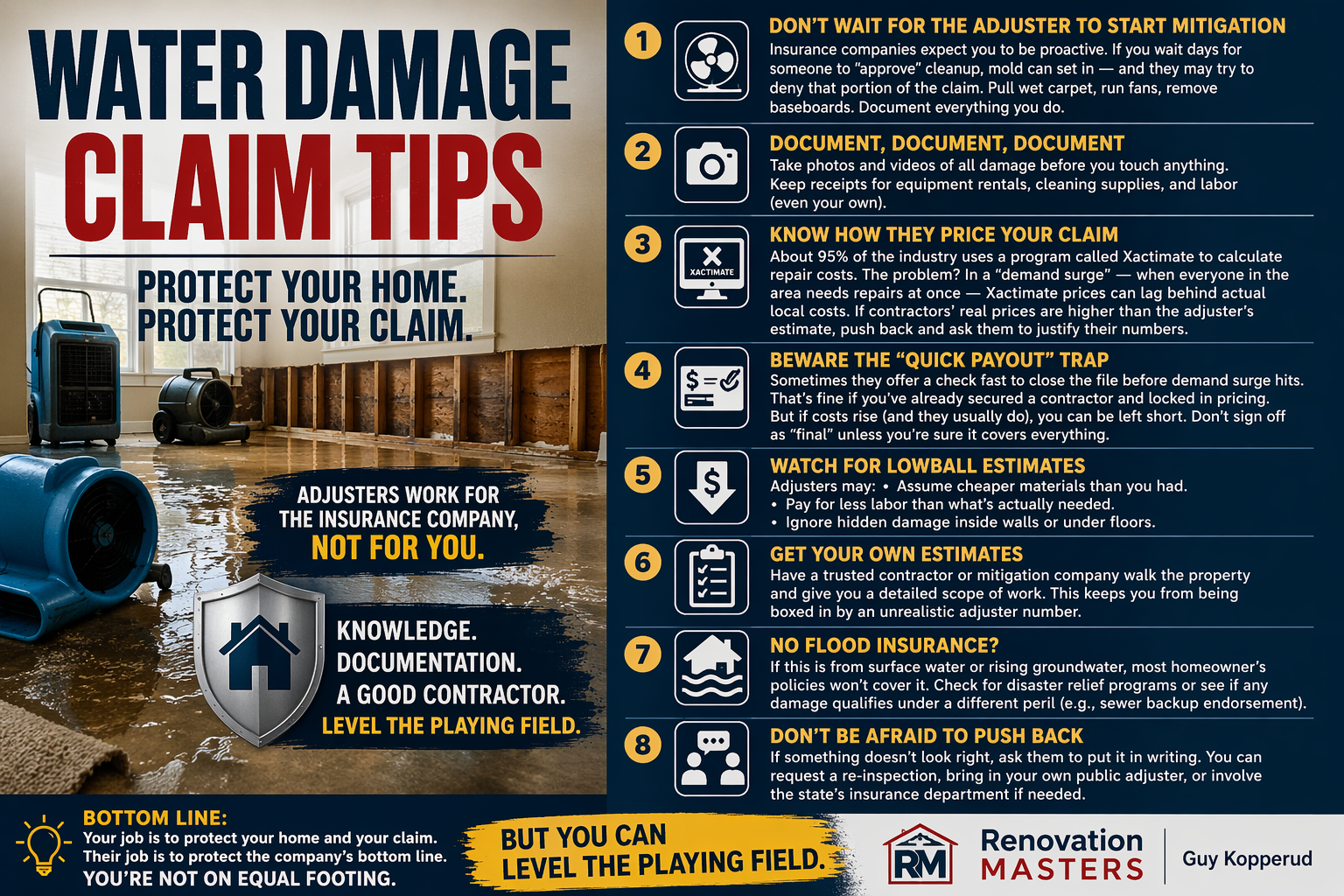
Here’s the thing… adjusters work for the insurance company, not for you. Some are fair, but many will do everything they can to keep the payout low. You need to protect yourself.
 Don’t Wait for the Adjuster to Start Mitigation
Insurance companies expect you to be proactive. If you wait days for someone to “approve” cleanup, mold can set in — and they may try to deny that portion of the claim. Pull wet carpet, run fans, remove baseboards. Document everything you do.
 Document, Document, Document
Take photos and videos of all damage before you touch anything. Keep receipts for equipment rentals, cleaning supplies, and labor (even your own).
 Know How They Price Your Claim
About 95% of the industry uses a program called Xactimate to calculate repair costs. The problem? In a “demand surge” — when everyone in the area needs repairs at once — Xactimate prices can lag behind actual local costs. If contractors’ real prices are higher than the adjuster’s estimate, push back and ask them to justify their numbers.
 Beware the “Quick Payout” Trap
Sometimes they offer a check fast to close the file before demand surge hits. That’s fine if you’ve already secured a contractor and locked in pricing. But if costs rise (and they usually do), you can be left short. Don’t sign off as “final” unless you’re sure it covers everything.
 Watch for Lowball Estimates
Adjusters may:
Assume cheaper materials than you had.
Pay for less labor than what’s actually needed.
Ignore hidden damage inside walls or under floors.
 Get Your Own Estimates
Have a trusted contractor or mitigation company walk the property and give you a detailed scope of work. This keeps you from being boxed in by an unrealistic adjuster number.
 No Flood Insurance?
If this is from surface water or rising groundwater, most homeowner’s policies won’t cover it. Check for disaster relief programs or see if any damage qualifies under a different peril (e.g., sewer backup endorsement).
 Don’t Be Afraid to Push Back
If something doesn’t look right, ask them to put it in writing. You can request a re-inspection, bring in your own public adjuster, or involve the state’s insurance department if needed.
 Bottom line: Your job is to protect your home and your claim. Their job is to protect the company’s bottom line. You’re not on equal footing — but knowledge, documentation, and a good contractor can level the playing field.
Hope this helps.
Renovation Masters