
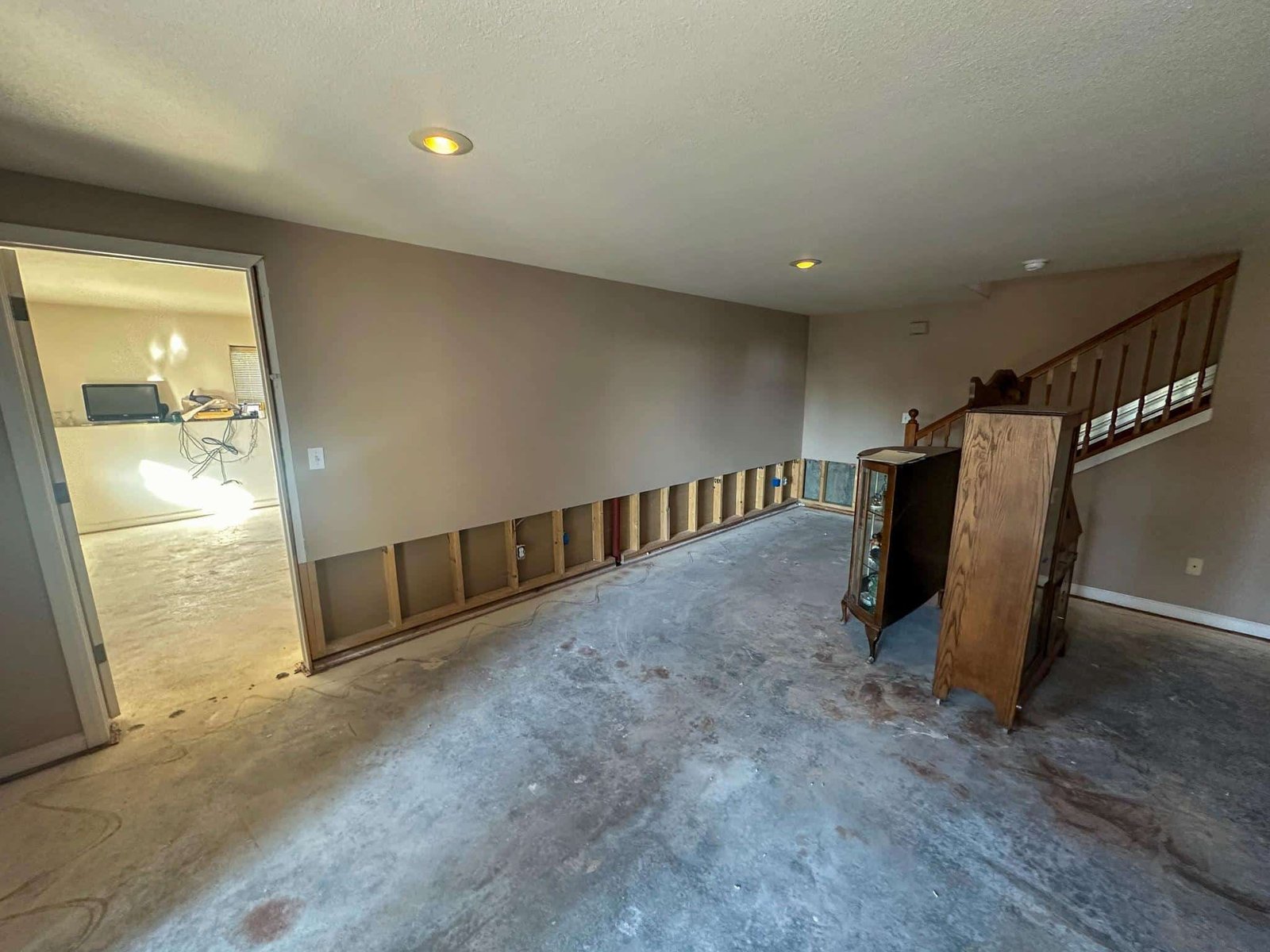
First, you’re doing the right thing by jumping on it quickly — that makes a huge difference. Since the carpet was fully saturated and water marks show it reached 6–7 inches, there’s a good chance some moisture wicked into the bottom portion of the drywall, even if it doesn’t feel wet to the touch.
Here’s what I’d do in your situation:
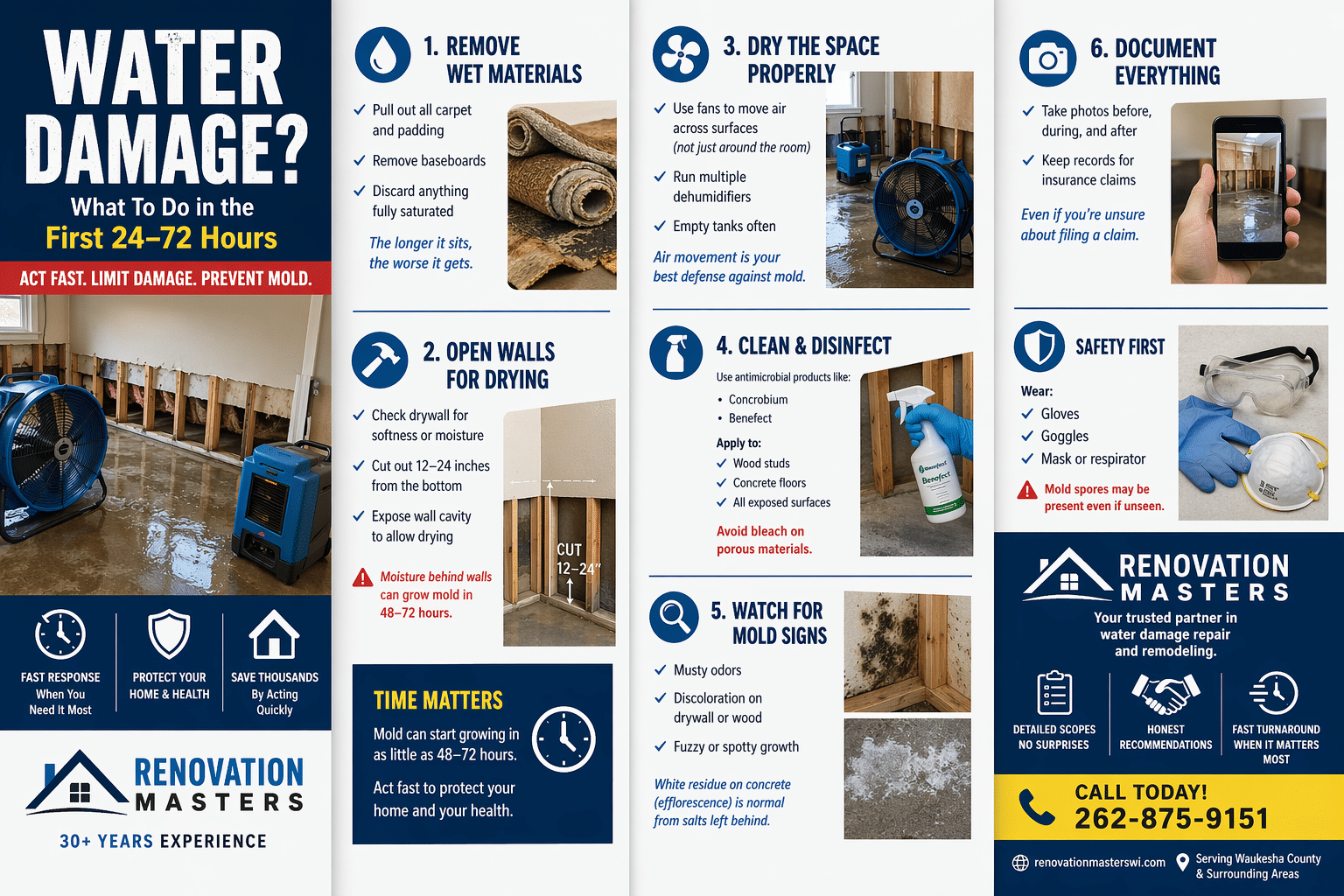
1. Keep removing wet materials.
Get all carpet and padding out.
Pull off baseboards.
2. Open it up for drying.
If drywall feels soft toward the bottom or a (usually we use a moisture meter that shows dampness) we cut 12–24 inches to let the wall cavity dry. You can attempt this or wait for a remediation contractor to do it.
Even if the wall surface feels dry, trapped moisture behind it can grow mold within 48–72 hours.
3. Keep air moving and moisture out.
Fans should move air across surfaces, not just blow around the room. Mold doesn’t like air movement.
Run as many dehumidifiers as you can and empty them often. Residential units don’t remove as much as commercial but its better than nothing.
4. Cleaning & disinfection.
After you remove wet material, spray studs, concrete floors, and any exposed surfaces with a antimicrobial (Concrobium, Benefect) don’t use bleach and water you will be rehydrating and promoting more mold growth. Bleach only works on non porous surfaces.
Wear gloves, goggles, and a good mask — even if you don’t see mold, there can be spores in the air.
5. Watch for mold signs.
Musty odor, discoloration, or fuzzy spots on wood or drywall paper. If you see it, treat it right away and keep drying. You might see white stuff called efflorescence on concrete or block, its normal from salts being left behind from evaporation.
6. Document everything.
Take photos before and after removal for insurance, even if you’re not sure you’ll file a claim.
Hope this helps.